Italy / Lazio, Tuscany & Umbria
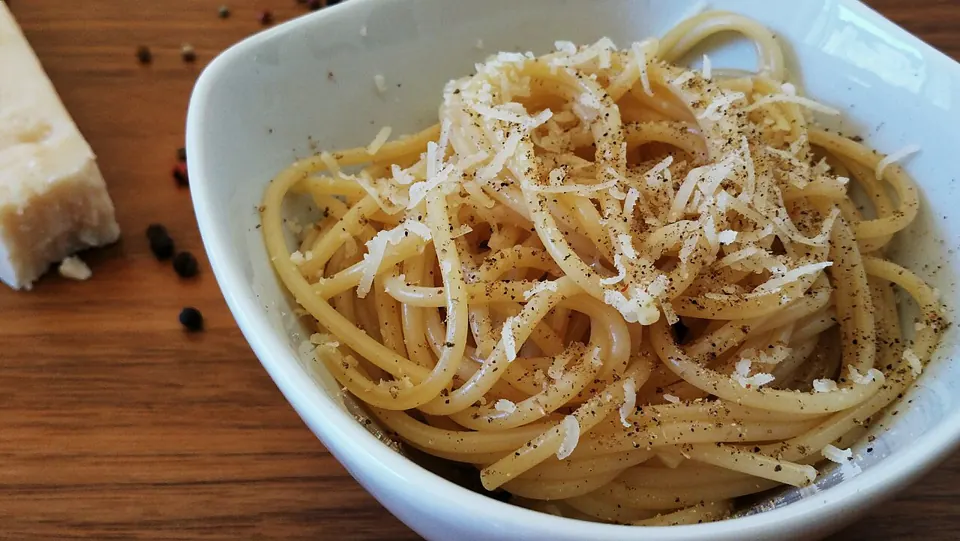
Cacio e pepe
pasta, pecorino romano and black pepper
Roman pasta combining pecorino cheese and pepper. Cooking water brings the sauce together, without cream.
APPROXIMATE ENERGY
550–680 kcal
per 120 g serving of pasta
How to read this estimate
Indicative range from the original catalog, awaiting nutritional validation. Recipe and serving size can substantially change the result.
Our visual scale per serving: low, under 400 kcal; medium, 400–700; high, over 700. The colour uses the midpoint of the range; it is not an official label or a health rating.
A DISH, A PLACE
What it is. What it tells you.
Cacio e pepe belongs to Rome’s pasta repertoire. Its identity combines pecorino and pepper in a sauce brought together with pasta water. The cheese supplies salt and character; the pepper is apparent in the aroma. Few ingredients require careful mixing: sprinkling grated cheese over dry pasta does not give the same result.
Make it part of your trip.
Where to look
Turismo Roma lists Cucina Pepe, Via Guglielmo Pepe 39, among venues serving tonnarelli cacio e pepe. Confirm the menu and opening directly.
This is a cheese-based preparation. If you have dietary restrictions, ask about the exact cheese and pasta used.
How it is made.
A preparation overview from the catalog. This is not a recipe tested in our kitchen.
- Cook the pasta, reserving some water.
- Mix cheese, pepper, pasta and a little reserved water.
- Stir to bring the sauce together and serve promptly.
Sources and scope.
Documentary check: 2026-11-08. The references below were consulted; this does not establish a personal visit or a kitchen test.
- Turismo Roma · Spaghetti cacio e pepe — Ingredients and the pasta-water mixing technique.
- Turismo Roma · Cucina Pepe — Address and dish listed by the tourism directory.
- Wikipedia · Cacio e pepe